
How to see
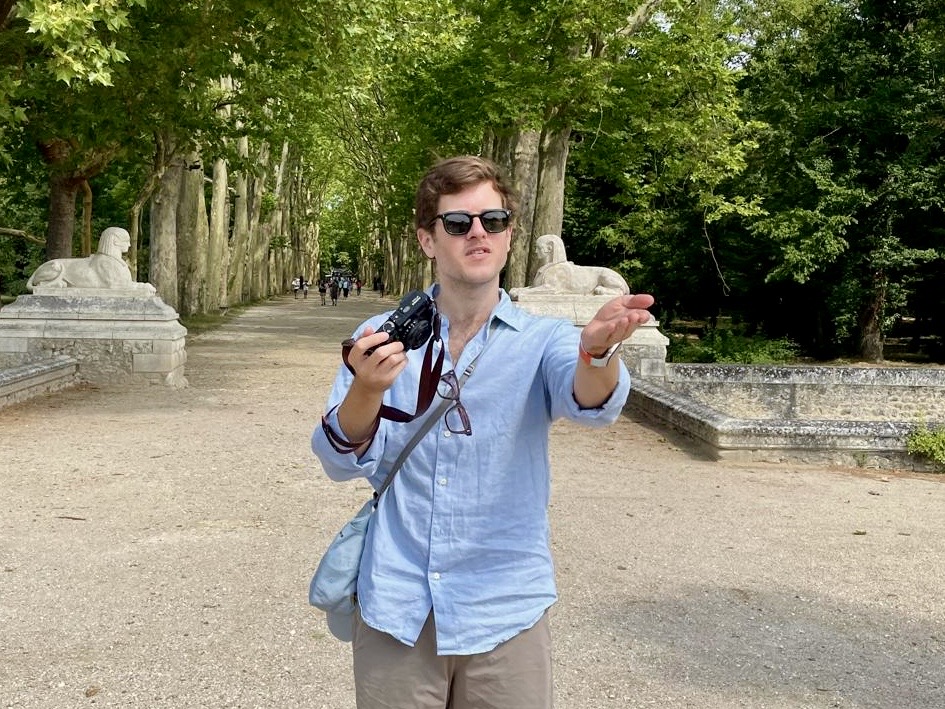
Something happens when I pick up my Fujifilm X100F. It has an inconspicuous black body, a fixed 35mm full-frame equivalent lens, and easy-to-adjust manual aperture, shutter speed and ISO controls. It all sounds technical, precise, and I suppose it is.
Yet to me, making adjustments in order to allow enough light to hit the sensor has become second nature, and part of the reason I love this camera more than my previous Nikon D60 is because the manual controls are where you’d expect them.
The joy of a prime, fixed lens also presents a limitation. I cannot zoom in, nor out. I have to physically move my body, my eye, my position in order to capture the subject. But, when creating something, it’s those very limitations that push forward creativity, they don’t hinder it.
From a young age, I’ve always loved photography for its ability to combine many disciplines. It’s an art form that requires a scientific approach and often captures (for me at least) a sociologic study of the world. My training taught me not only how to manipulate cameras and accessories, but how to see.
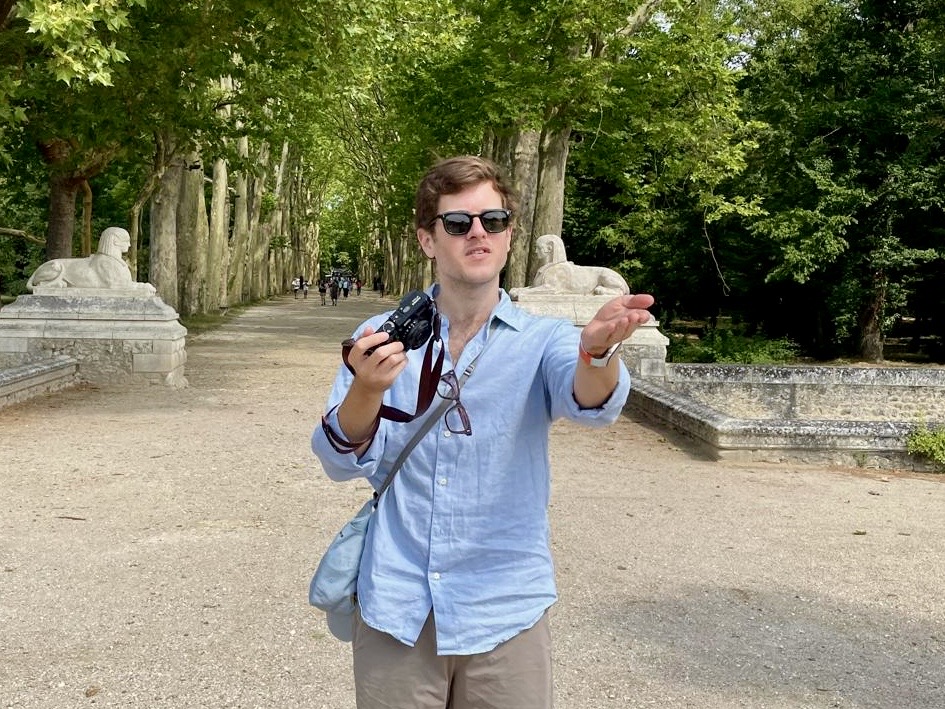
That’s to say, I turn to photography to help me understand the world around me, capturing interesting perspectives that, most likely, only I will ever view. I have framed photographs of strangers on my living room wall – they ask the question about society, and why people have an instinctive, cultural reflex to capture a photo rather than think about the framing with intention.
Rather than snapshots and aide-mémoires – which, don’t get me wrong, I love and absolutely have a purpose in life – I try to look for interesting perspectives, framing images that otherwise might go unnoticed, and often picking the most authentic portrait from a series (where the subject is natural, rather than performative).
But it's hard to make the time to indulge in this creativity, especially finding energy around earning a living and, at periods, during elections too. My curiosity is still alive, and my desire to know more about the communities around me is as strong as ever.
And whilst my partner and I were away at the weekend with friends, one asked ‘why don’t you use photography to earn a living?’. It’s a question I’ve always been shy of: it’s one thing to create something, it’s another thing entirely to be commissioned to do so.
I spent time reflecting on their question and the honest answer is that photography has been how I’ve earnt a living – just not exclusively. It’s been the foundation of my approach to communications and campaigning: the instinct to capture an image that can tell the story, and framing each photograph in a way that communicates clearly.
In my last role at a multinational company that spanned five countries with three working languages it was abundantly clear the essential role that photography had to play in communications. Without the need to translate, a photograph could itself tell the story instead and be supported by copy, not the other way around.
Before that, in my role as a Campaign Manager, photographic images were essential to capturing the attention of voters on a wide range of subject. One I remember was a photoshoot with an MP and a pensioner discussing the rising cost of living, pouring over a utility bill.
When communications are measured by their impact, and how they grab their audiences’ attention, photography becomes essential. So, whatever my role will be, on day one I’ll have my trusty Fujifilm X100F in my toolkit.