
Can Britain learn from the Dutch approach to active travel? And how can communications help?
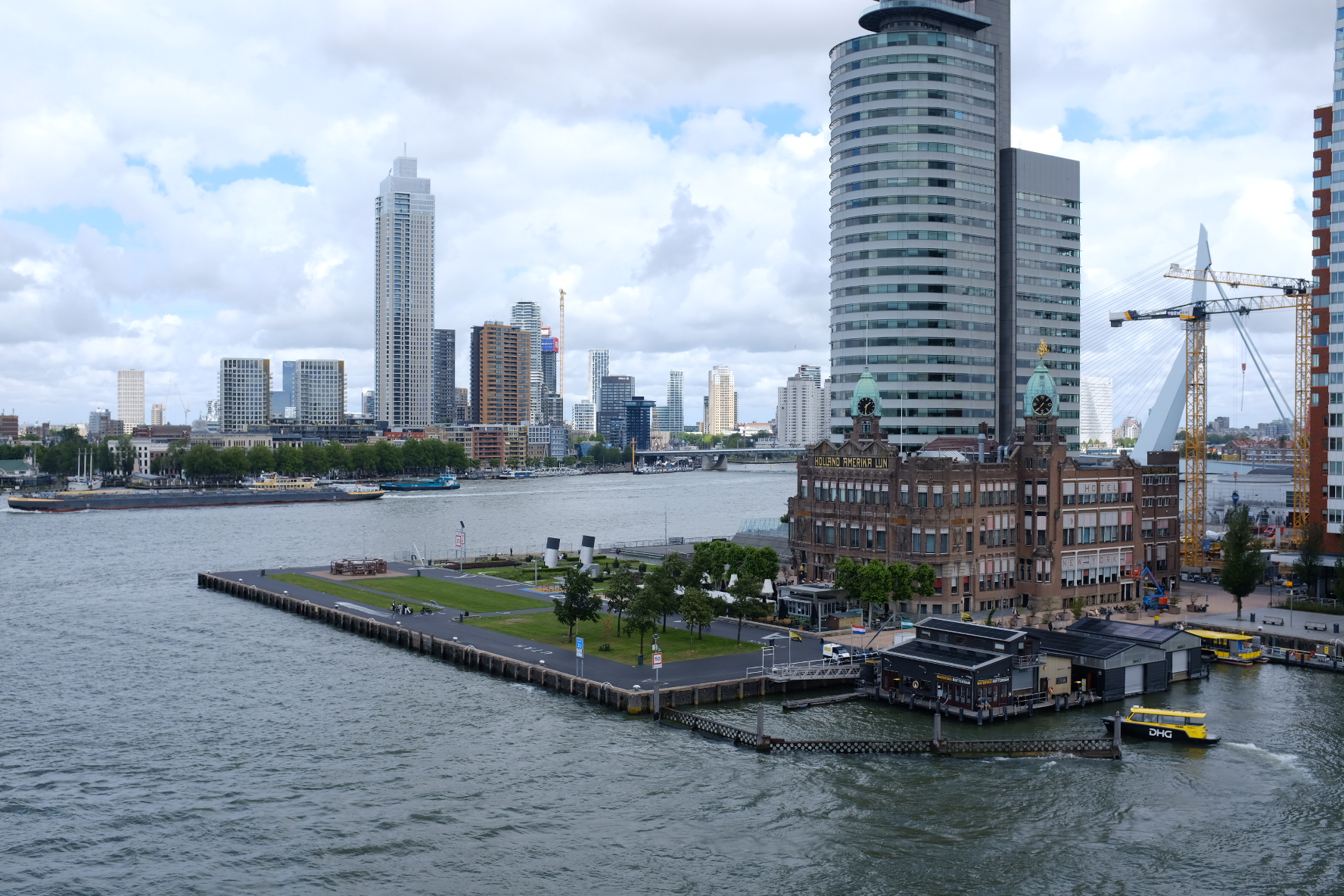
The Government announced last week that it wants 60% of pupils in England travelling to school on foot or by bike, spending over £4.5 billion over five years. By chance, I spent a couple of days in Rotterdam, where active travel is clearly visible as part of an integrated approach to getting around the city, and the region. Can England, and Britain more broadly, learn from and implement a Dutch approach, and if so how can communications and engagement help?
Let's address the argument we hear all too often: 'But the Netherlands is relatively flat and relatively small, compared to Britain'. And yes, it's true that England alone is around three-times the size in terms of population and land area. But that shouldn't prevent choice – where it makes sense – for active travel to take a lead in getting people to where they need to be whilst promoting a healthier lifestyle, nor should it stop a phased region-by-region rollout of any new approach.
It was only relatively recently that the Netherlands moved away from a car-centric travel strategy. Their approach continues even now with a Tour de Force programme which aims to increase the distance travelled by bicycle in the Netherlands by 20% in the next ten years through improving links between the cycle network and public transport, introducing smart technologies (such as traffic light priority, a system to indicate parking availability, or a chip to trace stolen bikes), and safety improvements for people as they grow older.
More recently Paris embarked on an ambitious active travel strategy in the run-up to, and continuing after, the Olympic and Paralympic Games. Plan vélo, acte 2 builds from the previous phase which saw €150 million spent on improving cycling infrastructure between 2015-2020 with an additional €250 million budget. As in the Netherlands, they want to introduce smart technologies including a 'green wave' for cyclists and public transport.
Much closer to home, we have the Mayor of London's Transport Strategy which aims for 80% of all trips in London to be made on foot, by cycling or using public transport by 2041. In June 2025, TfL reported that this number was at 63.2% in 2023, already ahead of the Government's ambition for England.
Now of course, whilst infrastructure has to reflect the society it serves, it also can be the impetus a society needs to change habits. Just look at how London's Elizabeth line has not only opened brand-new ways of travelling across the capital, but has already become the busiest railway service in the country. We must remember that we need to build it in order for people to be able to come.
So back to the Dutch approach, in a city like Rotterdam – where arguably the post-war rebuild helped in terms of space for the infrastructure needed – there is a mixed approach to the street. Cars, vans and lorries share their space with buses and trams, cyclists have dedicated bike paths and pedestrians their own space too. And the hierarchy feels considered too, with each mode appearing to give way to the smaller, more vulnerable class.
What's more is that, unlike in London, the majority of cyclists stopped at every red traffic light. Infrastructure alone can't change behaviour: the Dutch lesson that often goes unreported is the decades of sustained public engagement that ran alongside the physical transformation of streets and cities. And that's where Britain, with its £4.5 billion commitment and its 60% ambition, faces its real test.
Start with the school run, and make it personal
Focusing on children getting to school is actually the smartest place to begin, and not only because the data supports it. Parents, rightly, respond to one thing above almost anything else: the safety of their children. And comms strategy should lead with that – not the carbon targets, public health statistics or the modal shift percentages. Safer routes, safer streets, safer journeys. That’s the conversation that will cut through, not only on the doorstep, but in the school gate WhatsApp group too.
Challenge the "it's not for me" problem
One of the most stubborn barriers to active travel in England isn't the weather or the hills – though both of these don't help – it's identity. Many simply don't see cycling or walking as part of how they can get around. Cycling in particular has a perception problem outside of cities: it's seen as a hobby for enthusiasts rather than a practical choice for ordinary people making ordinary journeys.
When visiting my hometown in Somerset, I'm always amazed at how low my step-count can be with the car-centric design. Yet here there are cycle paths and still the car is the default way to get around town. That's why effective engagement needs to dismantle this perception.
In Rotterdam, I saw school kids, older people, delivery drivers and professionals all on their bikes. That diversity is valuable, it normalises the choice to bike. The challenge in England is that where cycling is rare, it looks countercultural and inherently risky. Local campaigns that showcase existing cyclists and walkers – not aspirational ones – can start to tip perceptions: real people, real journeys, Lycra very much optional.
Show, don't tell
If there's one trap comms campaigns, especially those by public institutions, fall into, it's leading with the collective good: the environment, public health, congestion. And whilst these are real and important, they don't resonate with people or change individual behaviour – particularly for those who feel like they've been lectured to.
What resonates is how it impacts someone's daily life: "Cut 20 minutes off your commute and stop paying for parking" lands very differently to – and much more personally than – "cycling is better for the planet".
The Dutch didn't sell active travel as a public virtue. They made it the most convenient option and let people draw their own conclusions. The challenge for England (and Britain) is to make that case honestly, where active travel genuinely is faster, cheaper, or easier, and resist the urge to moralise where it isn't.
Invest in what exists, build on it consistently
One of the reasons active travel infrastructure in England has felt so piecemeal is that it has largely been piecemeal. Different local authorities have deployed a patchwork of schemes that vary wildly in quality, continuity and ambition. A protected lane that disappears at a junction, or a cycle path that ends without warning – these don't just frustrate cyclists, they actively put people off cycling entirely.
And whilst the guidance already exists (take a look at the DfT's ‘Cycle Infrastructure Design’ Local Transport Note 1/20), the political will to implement is often missing. Paris and the Netherlands, and arguably London, didn’t achieve coherent networks by letting every neighbourhood negotiate its own version of a bike lane. They applied a framework seriously and consistently, and England needs to do the same: not another review, not another consultation, but a clear expectation that the guidance will be followed.
In many parts of England, this isn’t starting from scratch either. Active travel infrastructure exists, but much of it is disconnected, poorly maintained (think potholes and overgrown hedges) or no longer fit for purpose, not meeting the current guidance. Worse than going unused, it sends a message that no one is serious about active travel. Continued investment in maintenance and in joining up existing infrastructure into coherent, legible networks could deliver meaningful change faster, and more cheaply, than building brand-new.
Speak to people before breaking ground
At the heart of any attempt to change behaviour is an age-old chicken-and-egg problem: whilst infrastructure enables behavioural change, it requires public buy-in to get it built in the first place. Governments that skip the engagement phase and go straight to building often find themselves fighting reargued battles, defending schemes that the public never felt any ownership of.
The comms work needs to start before the first spade breaks ground and means building broad coalitions of support with those who have a stake in the outcome and can speak with credibility to different audiences: local businesses, schools, health services, employers. A GP talking about childhood obesity is more persuasive to a parent than a transport portfolio holder talking about modal shift.
There is an important distinction between engaging communities on how change will be delivered and giving them a veto on whether it happens at all. This doesn’t mean ignoring them, but bringing them on the active travel journey through engagement using communications to build understanding and consent for direction, and hearing their concerns early.
England has the ambition and, now, some of the funding to make it happen. What it needs is the patience to bring people with it, and a communications strategy that treats the public as partners in the change, not passengers.